Our Courses
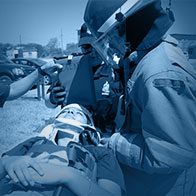
EMR or First Responders such as firefighters, police officers, and or emergency dispatchers are often the first to give life saving instructions over the phone or when arriving on the scene to provide emergency medical care to critical injured or sick patients.
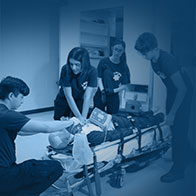
EMT’s provide out of hospital emergency medical care and transportation for critical injured or sick patients. EMTs have the basic knowledge and skills
necessary to stabilize patients ranging from non-emergency medical
transports to life threatening conditions. Emergency Medical Technicians are a critical link between the scene of an emergency and a definitive health care system.
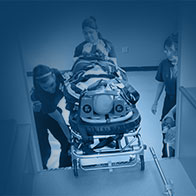
The primary focus of the Advanced Emergency Medical Technician is that of an EMT combined with limited advanced emergency medical care skills. Skills like, intravenous access and intubation of critical pateints. Advanced Emergency Medical Technicians perform such interventions under medical oversight. Like all EMTs, Advanced Technicians are part of a comprehensive health care system.
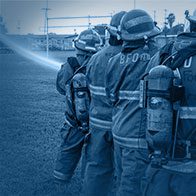
The main duties of a full-time firefighter are to help protect the public in emergency situations. They respond to a wide variety of calls, such as car
crashes, chemical spills, flooding, water rescue and general rescue as well as fires. With many fire crews being trained as first responders they can provide first aid until the arrival of ambulance personnel.
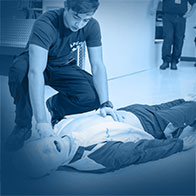
BLS certified individuals provide immediate lifesaving care to critical patients who access the emergency medical services system. They have knowledge and skills necessary to provide immediate lifesaving interventions while awaiting additional EMS resources to arrive. These individuals are a vital part of the comprehensive EMS response. Certified individuals perform basic interventions with minimal equipment.
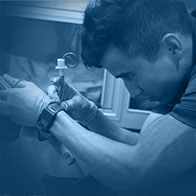
Advanced Care Life Support certified individuals are instructed in providing advanced emergency interventions. Skills include: Effective chest compressions, use of a bag-mask device, laryngoscopic intubation, use of an AED, early management of respiratory and cardiac arrest, early management of peri-arrest conditions such as symptomatic bradycardia, airway management, related pharmacology, management of stroke, and effective communication as a leader of a resuscitation team.

Pediatric Advanced Life Support certified individuals are instructed in providing advanced care to sick and injured pediatric patients. Skills include: High-quality Child CPR, AED and Infant CPR, recognition of patients who do and do not require immediate intervention, recognition of cardiopulmonary arrest early and application of CPR within 10 seconds, differentiation between compensated and decompensated (hypotensive) shock, early interventions for the treatment of shock, differentiation between unstable and stable patients with arrhythmias, clinical characteristics of instability in patients with arrhythmias and post–cardiac arrest management.
Frequently asked questions
Effectively, these certifications represent different levels of care that are regulated by state and medical supervision. However, in practice, paramedics are the highest level of care in the field when it comes to ‘EMTs’. They are able to administer narcotics and perform advanced care to emergent patients. Again, between EMTs and Advanced EMTs there is a differentiation in that Advanced EMTs are trained to recognize arrhythmias, administer some intravenous medications, and perform advanced respiratory and cardiac care.
IAEMTs curriculum enables it’s students to successfully pass the National Registry of Emergency Medical Technicians EMR, EMT, and or Advanced EMT exam and the Texas Commission on Fire Protection basic structural firefighter exam. For more information on the NREMT examinations, please feel free to browse over to their official website, a link is provided here. For more information on the the Texas Commission on Fire Protection basic structural firefighter exam, please click here.
No. After certification, the student or individual who has passed an EMR, EMT, or Advanced EMT National Registry Exam or the basic fire suppression exam from the Texas Commission on Fire Protection must apply for state certification. The requirements for practicing medical care at the certification level is controlled by each state. In the State of Texas, the application process is made available by the Texas Department of State Health Services and or the Texas Commission on Fire Protection.
Currently, there is no portal for online education. However, this does not mean that one could apply and learn remotely. Depending on resources, availability and number of participants per given class, arrangements can be made to do so. Please feel free to contact us and will be more than happy to learn how we can help you achieve your goals.
Traditionally, a large percentage of EMTs work in a pre-hospital setting; usually on an ambulance. However, EMTs respond to various emergencies and can be stationed or employed by fire departments, clinics, ER rooms, theme parks, beach patrol/lifeguard or at sporting events. Emergency Care knows no boundaries.
Yes. The EMT certification is the foundation of EMS training and serves as a fundamental basis both academically and in practice. However, a certified EMT is able to apply for a Paramedic course without being previously trained or certified as an Advanced EMT.